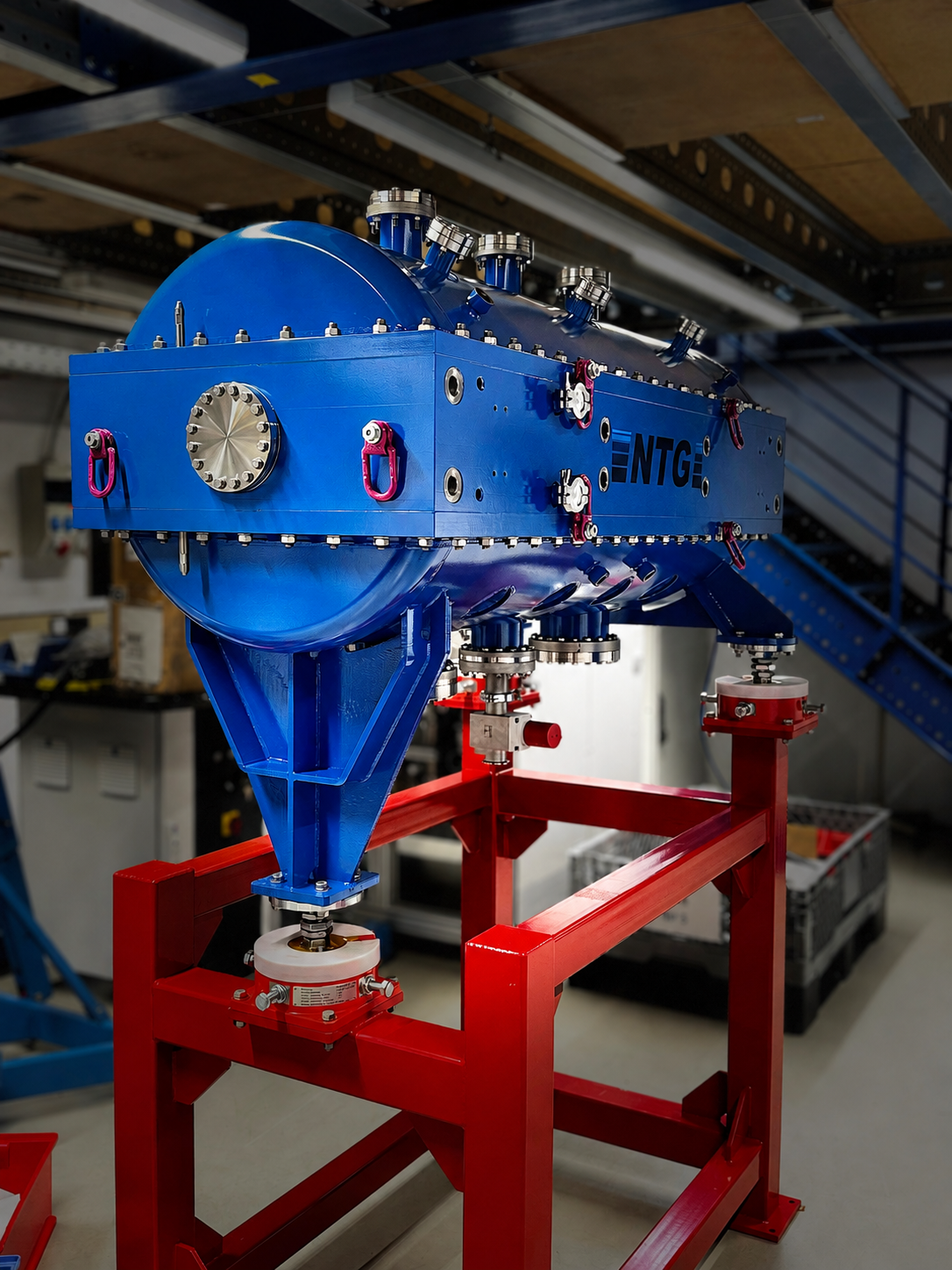
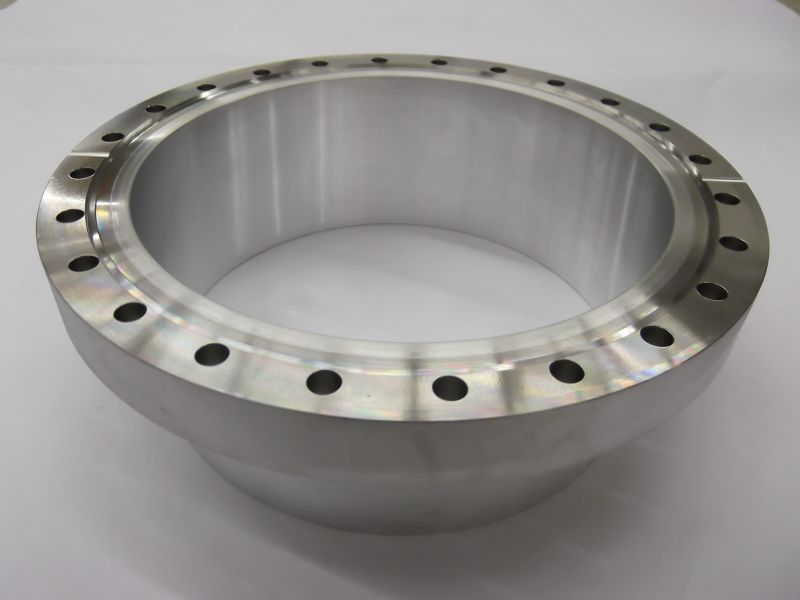
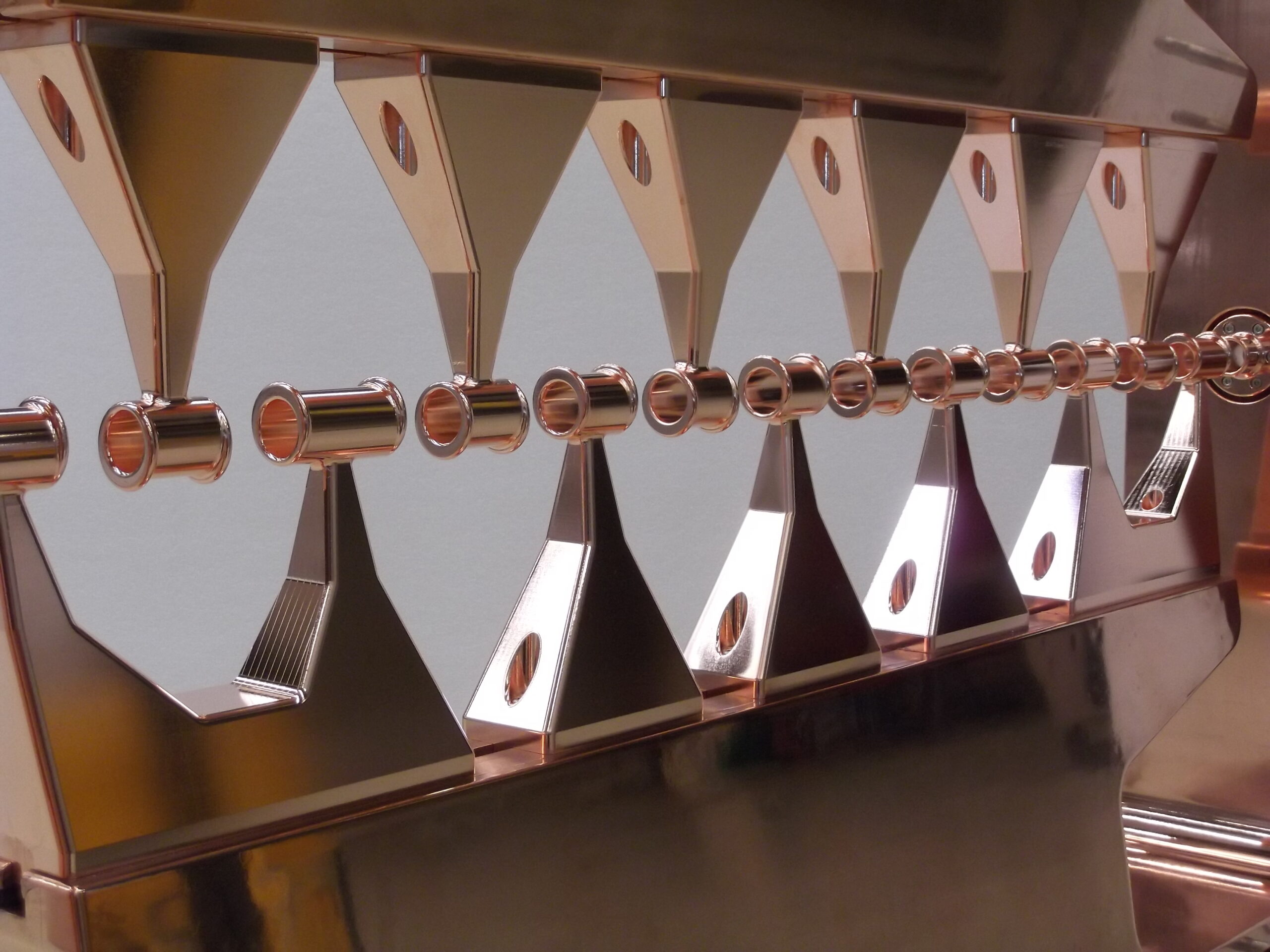
Complex RF feedthrough for UHV applications
The component must combine high-frequency capability, vacuum tightness, and mechanical stability — even under thermal and process-related stress.
The technical challenge starts with the material combination:
• Alumina ceramic (Al₂O₃) for electrical insulation
• OFHC copper for RF-compatible conductivity and high thermal performance
• Stainless steel for structural integrity and vacuum-compatible integration
The real complexity, however, lies in joining these materials.
Creating a reliable ceramic-copper-stainless steel assembly requires precise control of:
• material compatibility
• metallization
• joint gap design
• temperature profile
• process stability
• leak tightness and repeatability
A key feature of this project is the circumferential brazing joint.
While comparable applications have often relied on end-face brazing, NTG can now also reliably realize the far more demanding circumferential brazing process.
The advantage of circumferential brazing lies in the joint design across a continuous peripheral interface. This can provide important design and manufacturing benefits, especially in terms of load distribution, joint stability, vacuum tightness, and integration into complex assemblies.
In particular, brazing ceramic-to-metal joints is one of the most demanding disciplines in advanced joining technology. Different coefficients of thermal expansion and strict vacuum requirements leave no room for compromise.
This is exactly the kind of complexity we master at NTG.
We manufacture precision brazed assemblies for demanding technical applications — reliable, repeatable, and engineered for performance.
🌐 www.ntg.de
#RFFeedthrough #RFCoupler #Brazing #VacuumBrazing #CeramicToMetal #UHV #VacuumTechnology #JoiningTechnology #Alumina #OFHCCopper #Engineering #NTG